Early Spring 2026
Spring has finally sprung!
It’s always a welcome change on the farm, with buds beginning to burst, fresh growth appearing across the fields, and farmland birds filling the air with birdsong once again.
Across the farm, it’s been a busy and exciting time. We’ve been tending to our overwintered crops as they come back into growth, while also making a strong start with drilling and planting as part of our new pesticide-free vegetable venture. At the same time, there’s been plenty of new life among the livestock, marking the true arrival of the season.
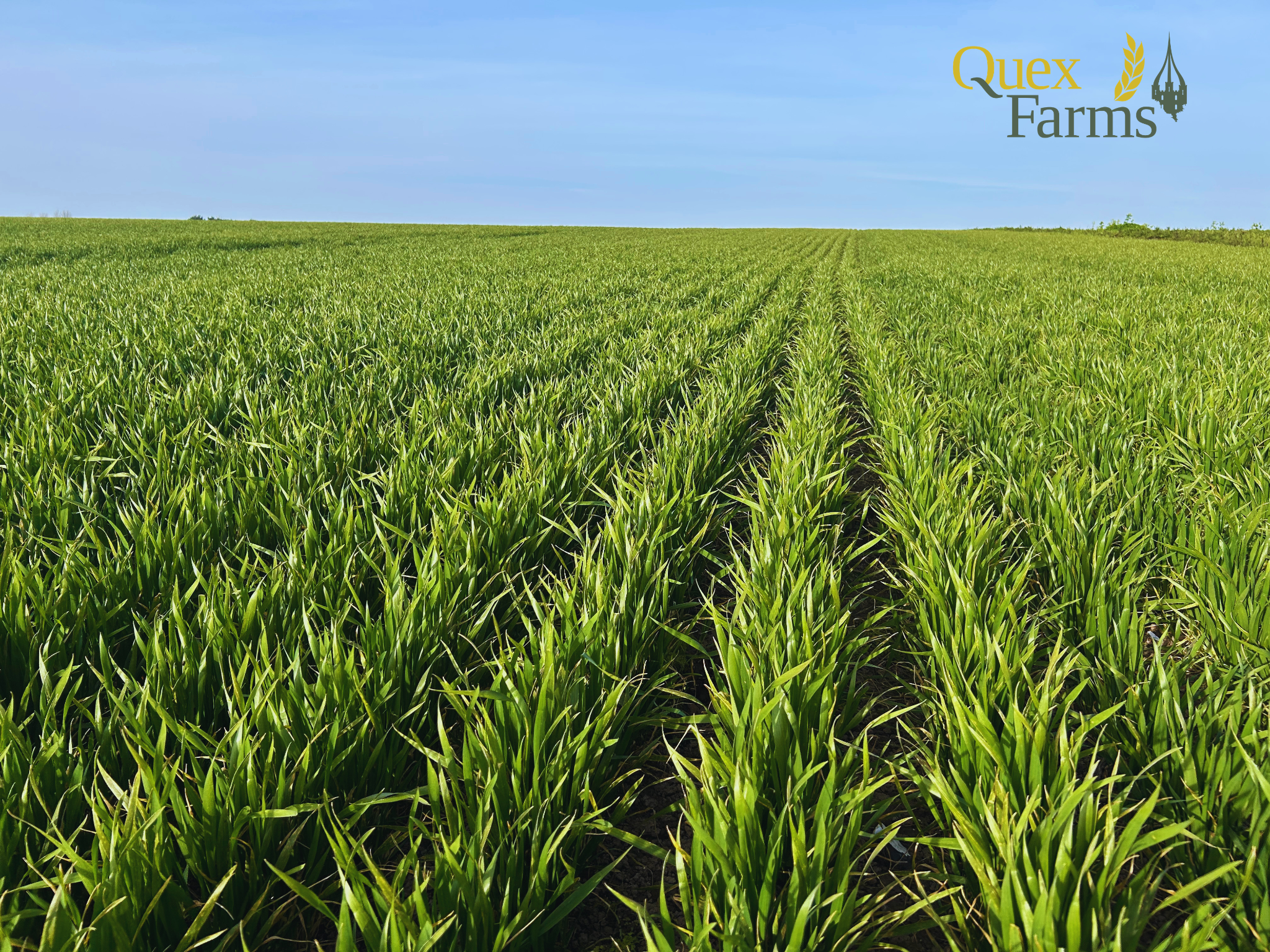
Winter Wheat, direct drilled into the stubble of a spring bean crop.
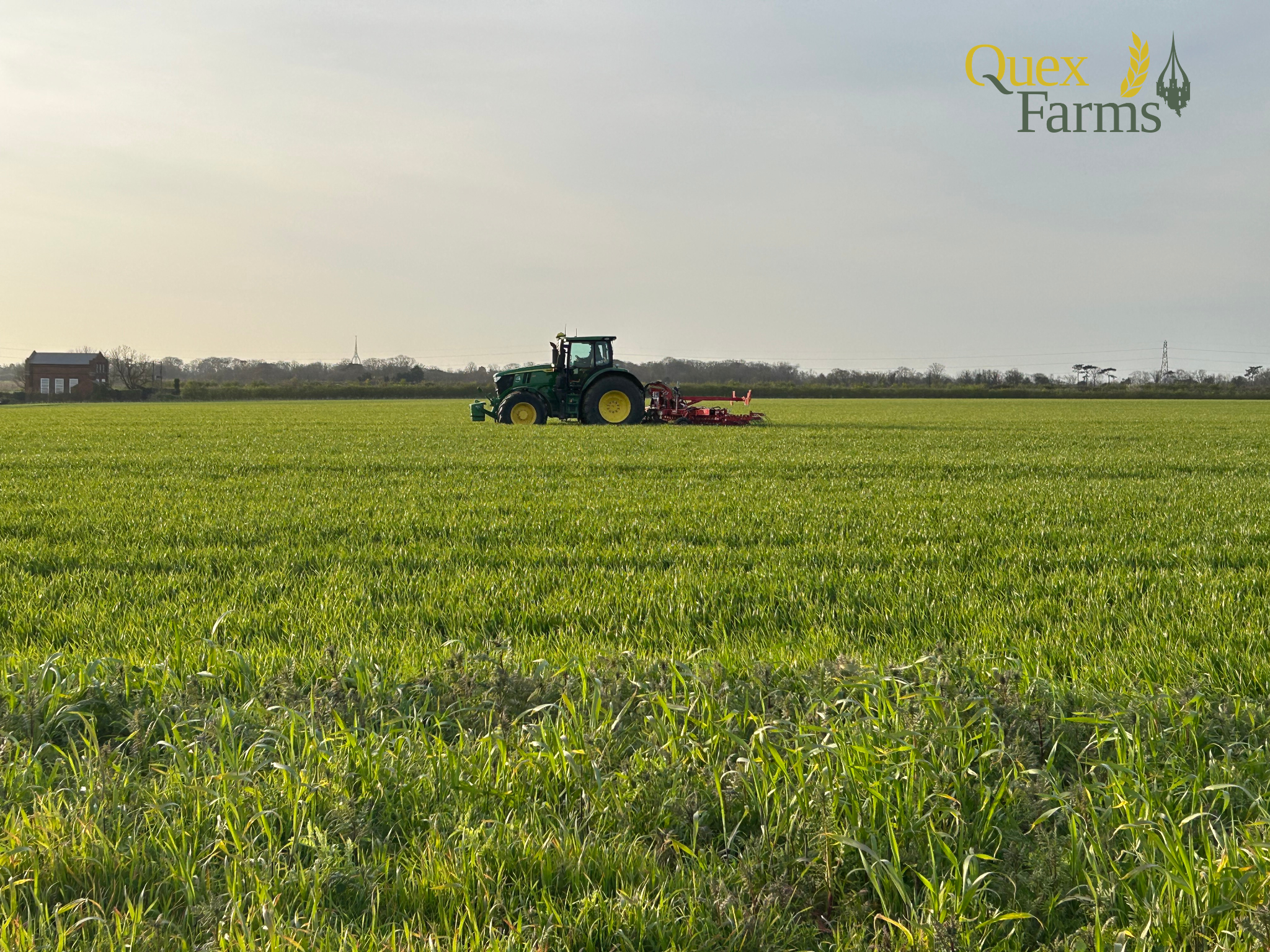
Mechanical hoeing between the wheat to eliminate more persistent weeds.
Winter Wheat is a main crop of ours, and something we focus on producing well. Across most arable farms, weeds are becoming more resistant to traditional chemistry, which is where mechanical hoeing is coming in.
In the image above, a local contractor is hoeing amongst the crop of winter wheat. This process will uproot persistent weeds, allowing them to fry up on the soil’s surface in the sun, allowing for nutrients to be more available to the cash crop.
Spring is also when many of our arable spring crops are established. Here we are direct drilling oats into a destroyed cover crop. This cover crop will have held much of the valuable nutrients which otherwise would have leached into the aquifer.
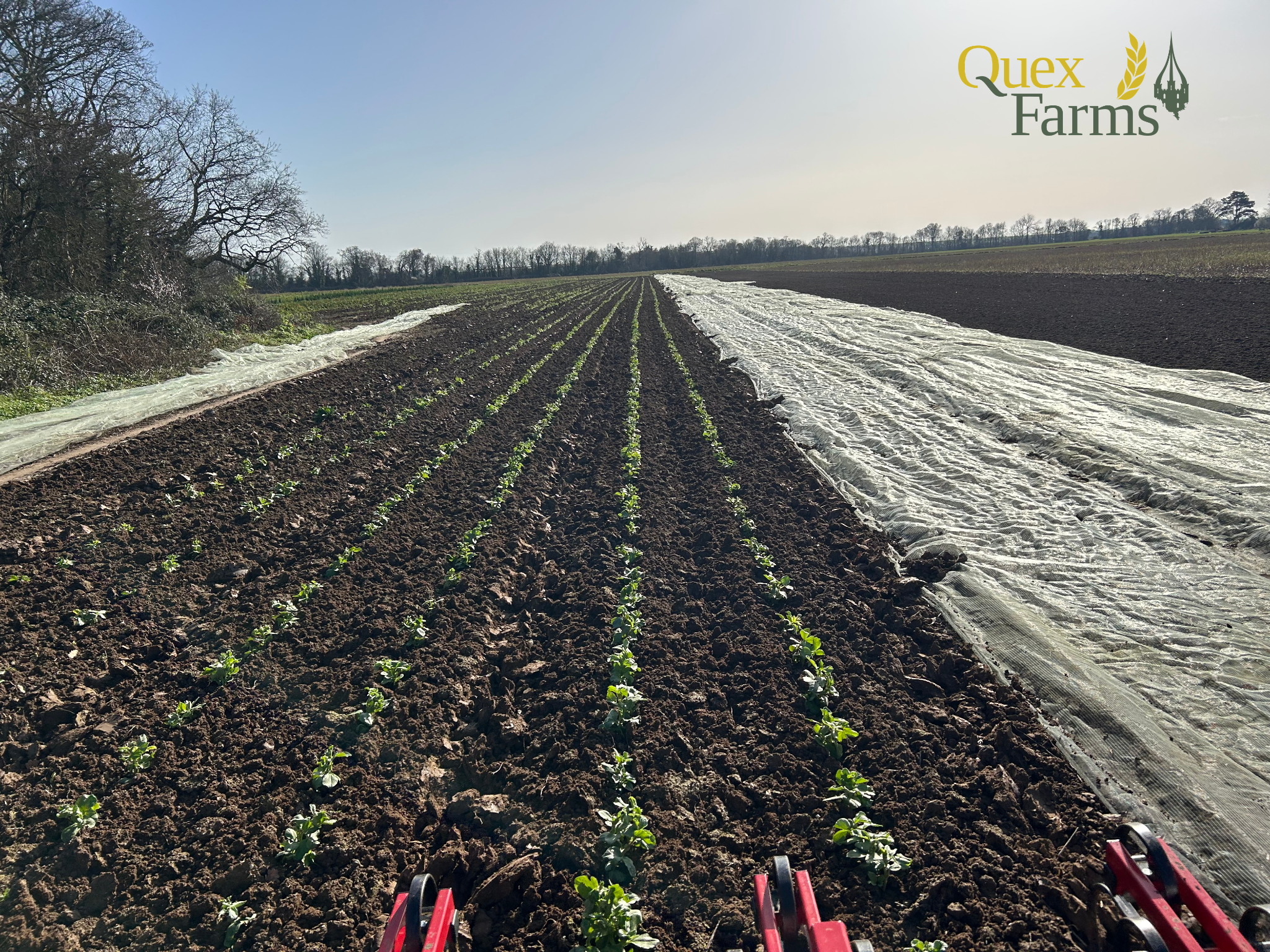
Shimming broad beans
On the vegetables, broad beans have also been weeded, and spring crops have also started to be sown and planted.
Onions, carrots, spinach, radish and beetroot have all been drilled, and the first of our plug plants have been planted, which include sweetheart cabbage and kohl rabi. These will be weeded later on as part of our pesticide-free approach.
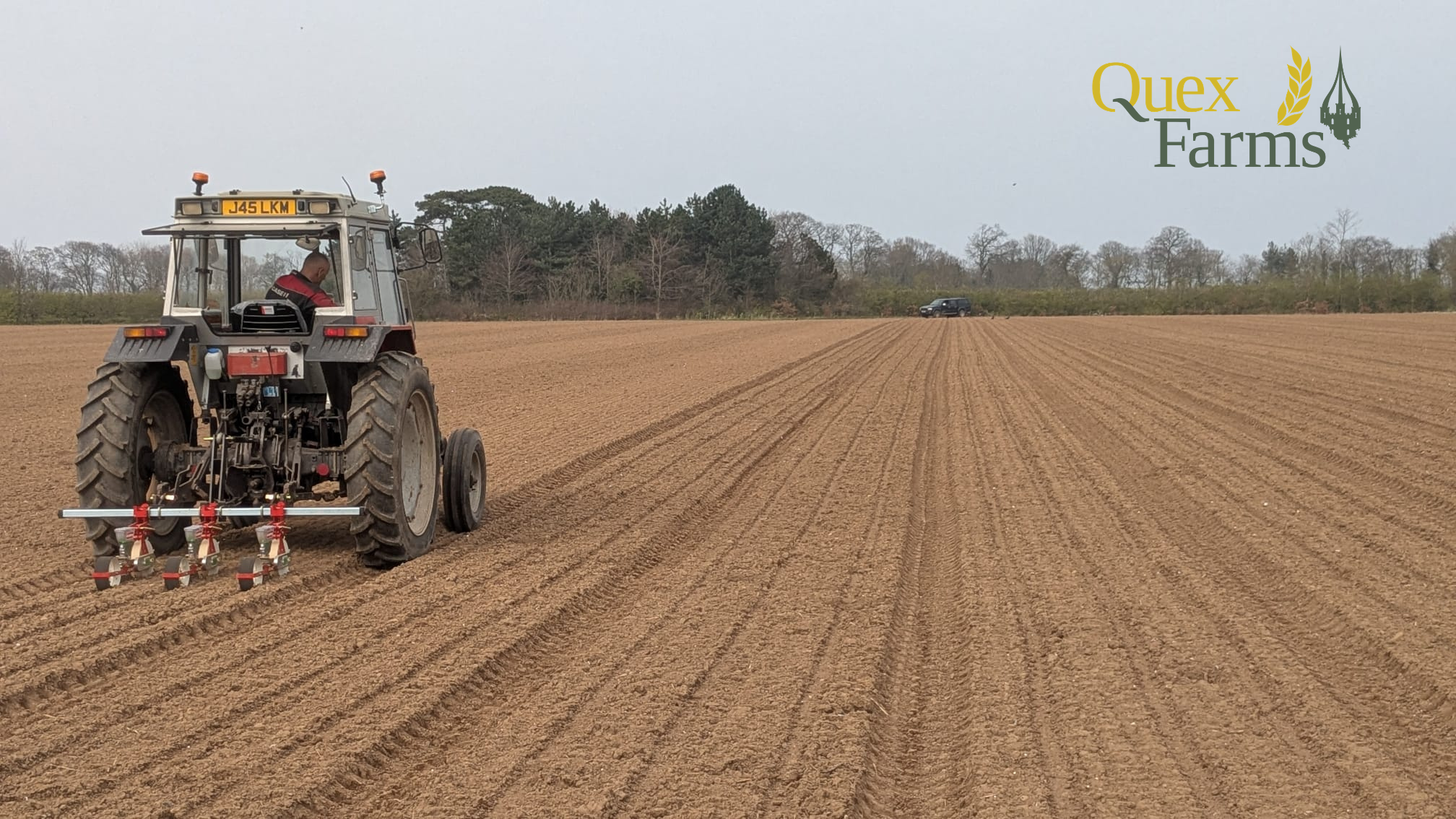
Pesticide-free beetroot being drilled.
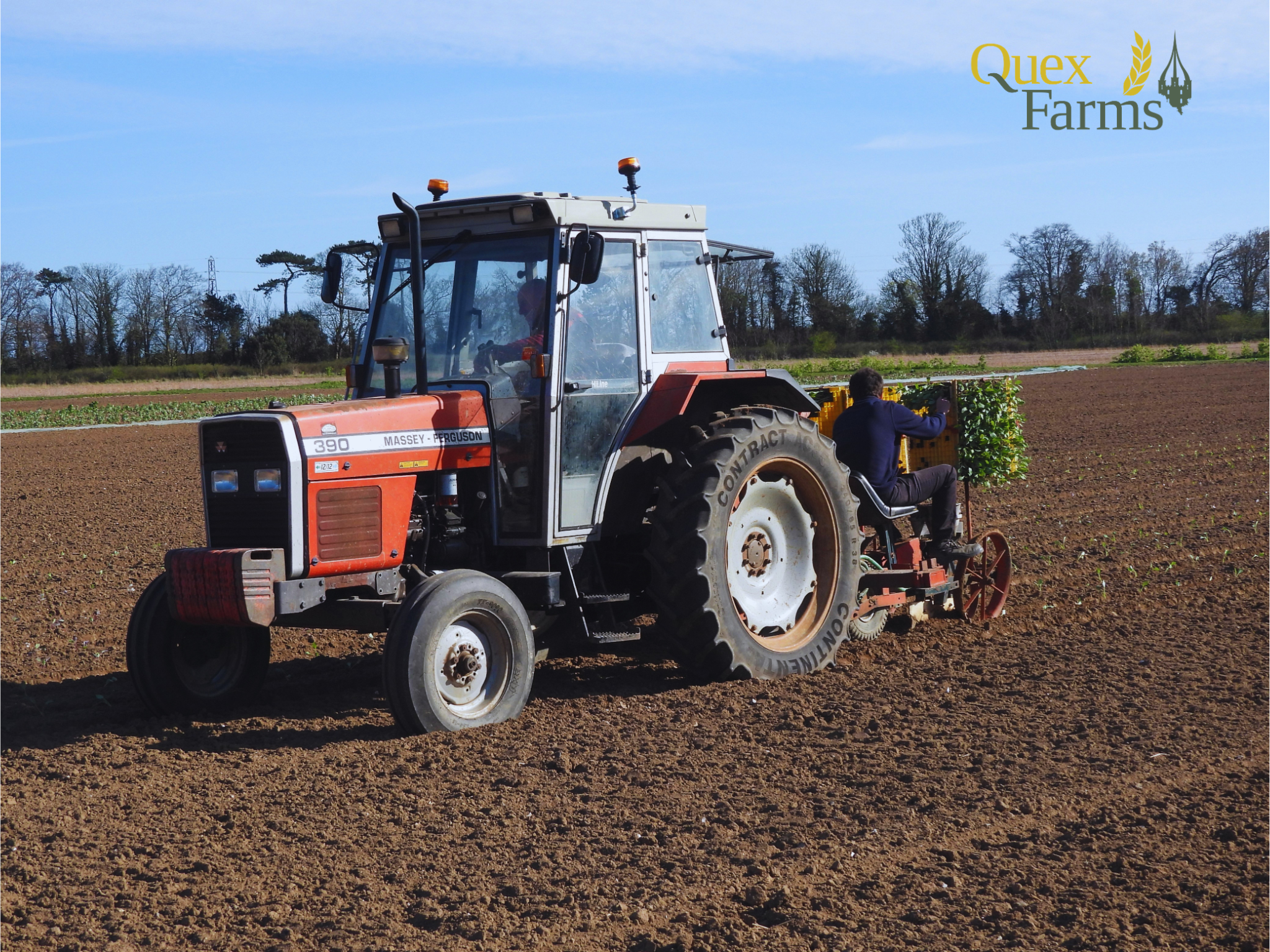
Pesticide-free cabbage being planted.
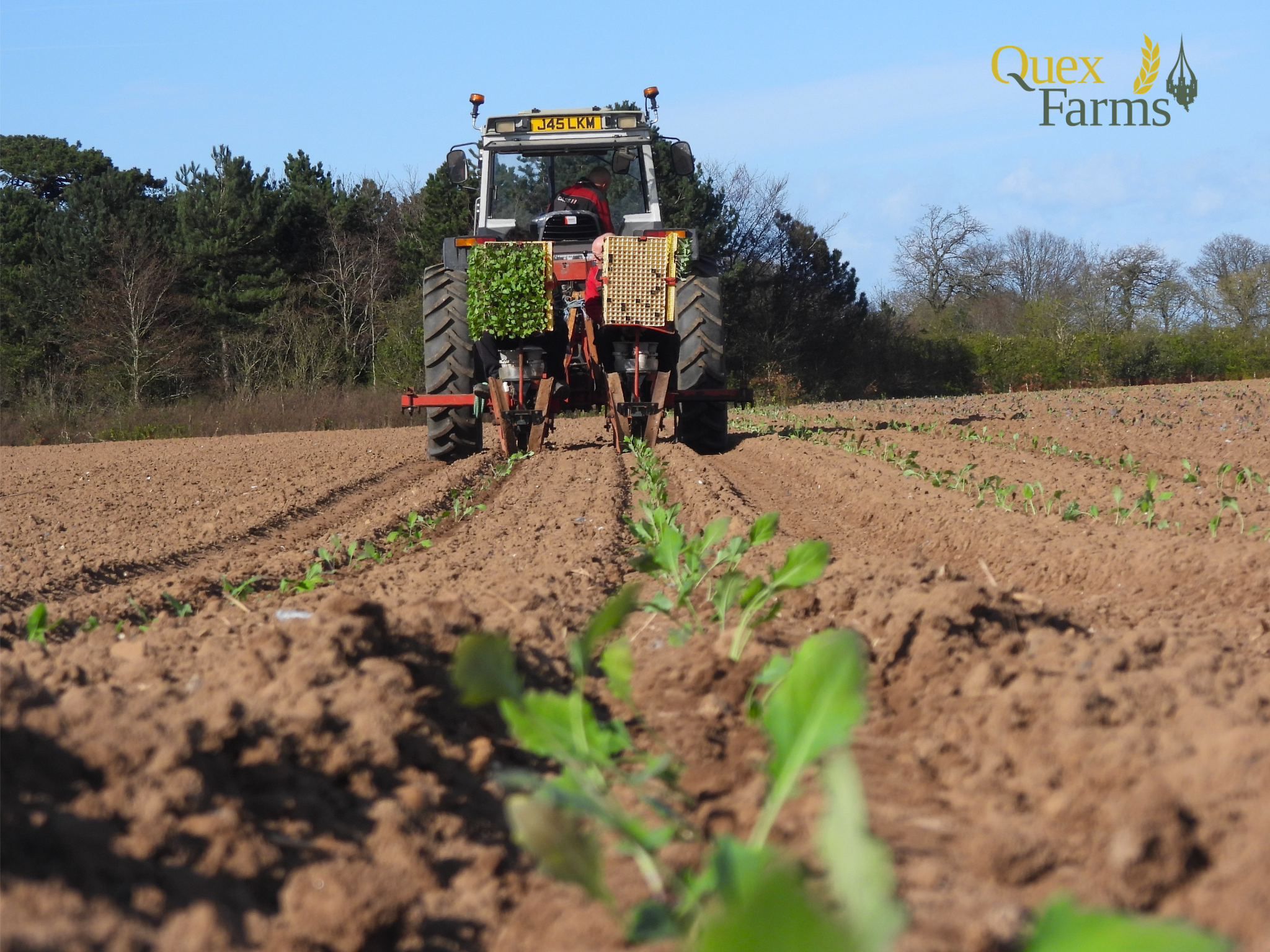
Pesticide-free kohl rabi.
Conditions over the past few weeks have been very favourable, allowing us to make an early start with drilling and planting across the vegetable ground. Getting crops in early is always beneficial where possible, as it helps spread the workload and can lead to earlier harvests later in the season.
These newly planted crops are currently under fleece, which helps to create a slightly warmer microclimate around the plants. This encourages quicker germination and establishment during the cooler early spring period. The fleece also provides protection from pests, particularly pigeons, which can quickly damage young plants if left unprotected.
As with all of our vegetables, these crops are grown without the use of pesticides. This means we rely on careful crop management, regular crop walking, and protective methods such as fleece to maintain crop health and quality. We will be monitoring these crops closely over the coming weeks to ensure they establish well and continue to grow strongly, so we can provide high-quality produce for our veg boxes and customers.
Finally, it’s not just the arable and vegetable sides of the estate that have been busy, the livestock have too!
Over on the marsh, Quex Barn has welcomed several new calves to the farm. In time, they’ll move on to graze our rough pasture.
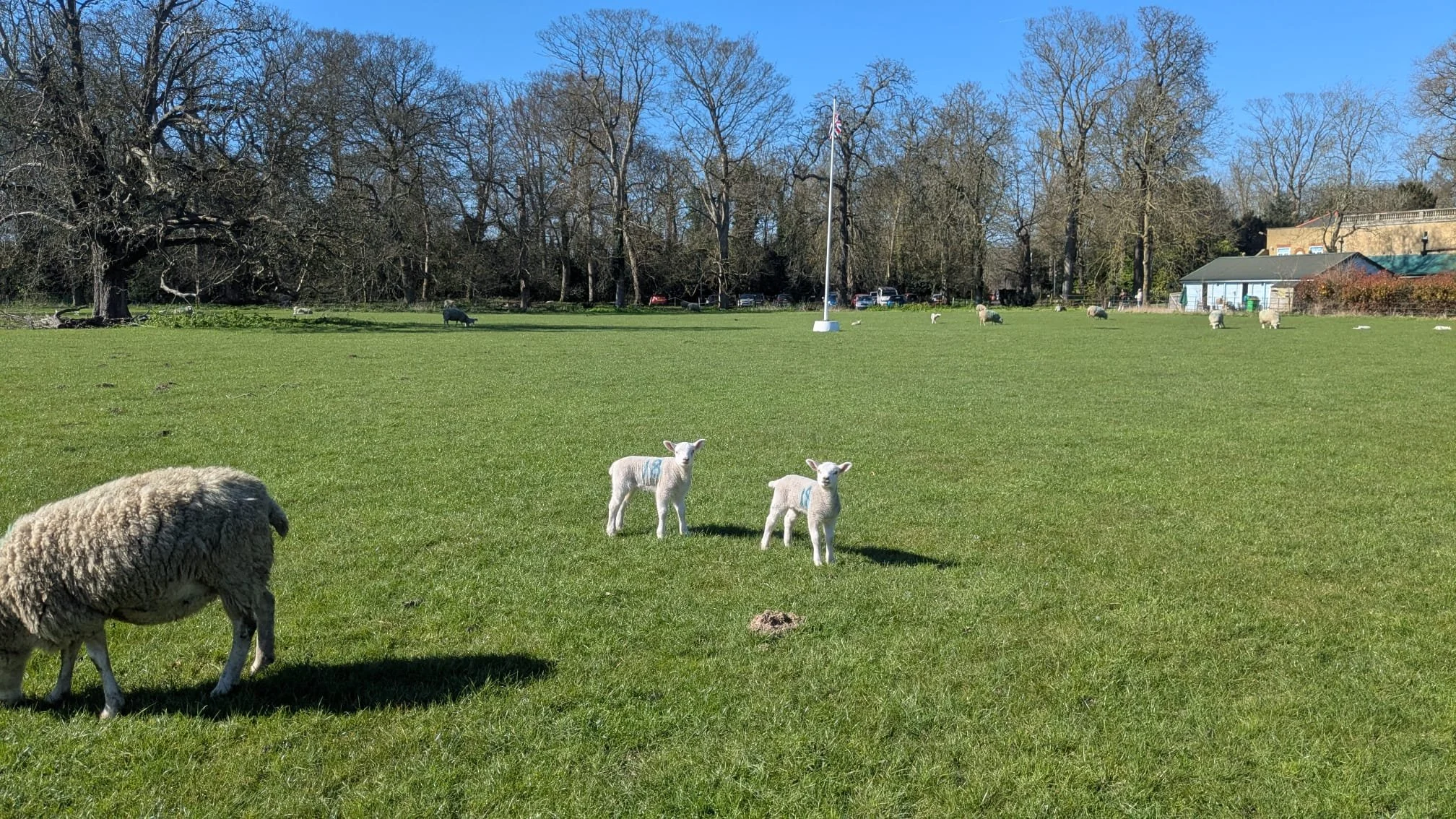
Meanwhile, some of you may have spotted new lambs on the front meadow. Gavin’s sheep, which were previously grazing our cover crops, have now returned to help keep the grass in the meadow under control.